
What is San Isidro?
If you're new to Madrid, San Isidro is the city's biggest homegrown festival - a ten-day celebration in mid-May built around Madrid's patron saint, San Isidro Labrador. It's not a religious spectacle in the Semana Santa sense, and it's not a music festival in the Primavera Sound sense. It's something stranger and warmer: a neighborhood-wide party where Madrid celebrates being Madrid.
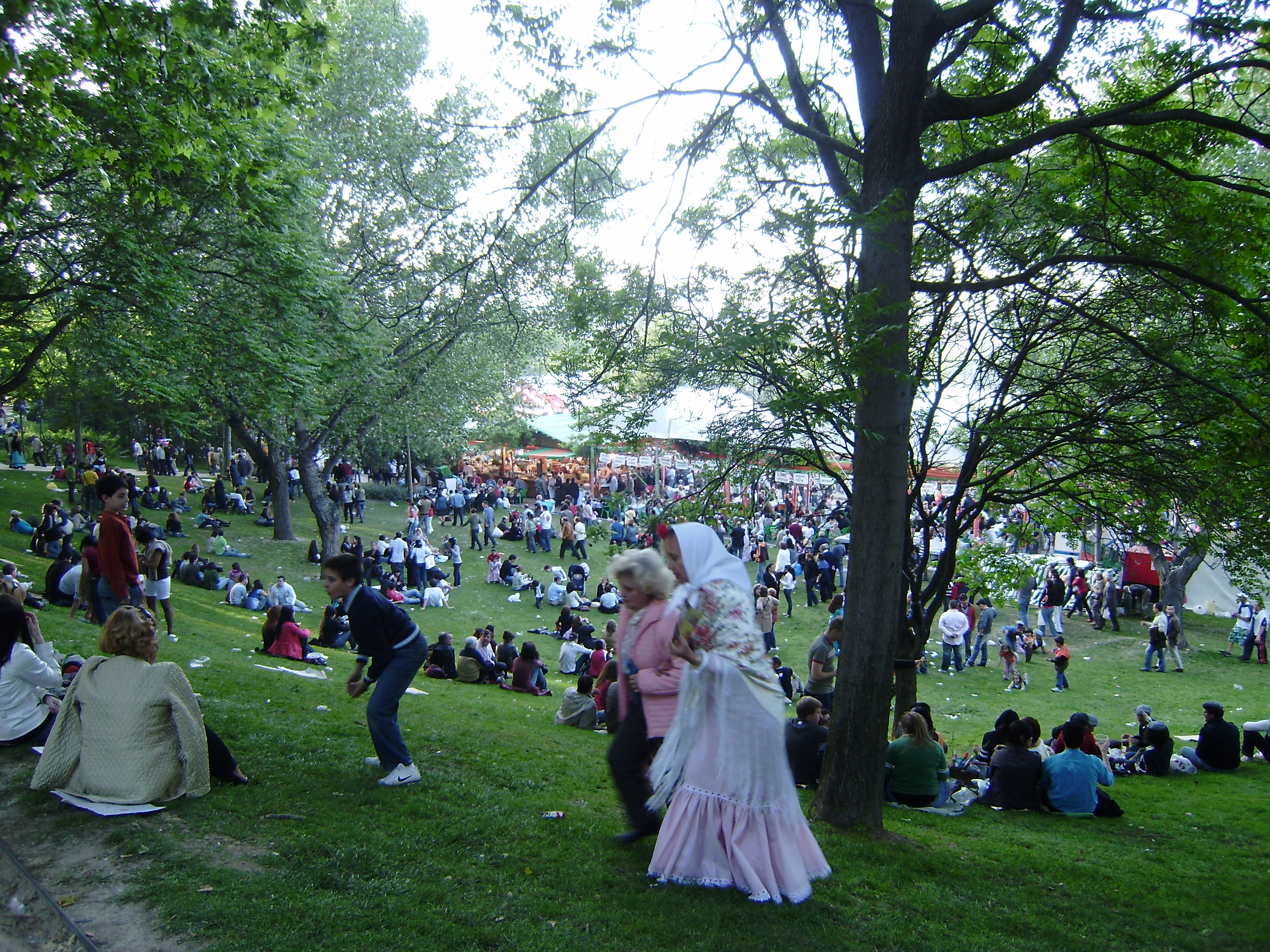
San Isidro was a 12th-century farmworker who reportedly performed miracles in what was then a small village outside the city walls. Over the centuries, his feast day - May 15 - became the day Madrileños put on traditional dress, head to the Pradera de San Isidro meadow, and drink limonada under the trees exactly like Goya painted in 1788. That painting, La Pradera de San Isidro, still hangs in the Prado, and the meadow still hosts the same picnic more than two centuries later.
In practice, San Isidro 2026 is three overlapping things:
- A city-wide free concert series across four main stages, plus dozens of smaller events in cultural centers across every district.
- A traditional festival with chulapo/chulapa costumes, chotis dancing, open-air zarzuela, Giants and Big-Heads parades, and the romería pilgrimage to the Pradera.
- The Feria de San Isidro at Las Ventas - the most prestigious month of bullfighting in the world, running from May into early June.
Almost all of the first two are free. That's the headline. You can spend ten days experiencing most of it without paying anything.
First timer? Don't try to do everything. San Isidro is decentralized - there are free concerts, theater, dance workshops, and markets happening simultaneously in six neighborhoods. Pick one or two days to go deep (at least one of those should be May 15 at the Pradera), and browse the rest casually.
Key Dates for 2026
The core festival runs May 8 through May 17, 2026, with the patron saint's feast day on Friday, May 15 - a public holiday in the Community of Madrid.
| Date | What's happening |
|---|---|
| Fri, May 8 | Pregón (opening speech) from the balcony of the Casa de la Villa in Plaza de la Villa, followed by the Giants and Big-Heads parade. |
| Sat-Sun, May 9-10 | First weekend of concerts across all main venues. Water blessing at the Ermita de San Isidro. |
| Mon-Thu, May 11-14 | Weekday programming: traditional music in Plaza Mayor, chotis workshops at Las Vistillas, district cultural events. Feria de la Cacharrería (ceramics fair) runs through this stretch. |
| Fri, May 15 | San Isidro Day. Public holiday. Romería (pilgrimage) and mass at the Ermita. Main day at the Pradera - food, music, traditional dress, crowds. Headline concerts in the evening. |
| Sat-Sun, May 16-17 | Closing weekend of concerts and performances. Festival officially winds down Sunday evening. |
| Through early June | Feria de San Isidro bullfighting at Las Ventas continues daily (typically evening corridas). |
May 15 is a Madrid-only public holiday. Most shops in Madrid will be closed or keep reduced hours. Banks, schools, and many offices are closed. Metro and buses run on holiday schedules. Restaurants in central neighborhoods stay open and get very busy.
Where to Go: The Four Main Venues
The festival is anchored on four stages, each with a different feel. If you want to sample everything, move between two or three over an afternoon.
1. Pradera de San Isidro (Parque San Isidro, Carabanchel)
The original site. A gentle hillside park overlooking the Manzanares, across the river from the city center. This is where the romería happens - the pilgrimage to the Ermita chapel where the saint's well is blessed. It's also where locals come to picnic on traditional blankets, listen to free afternoon concerts, and eat rosquillas from the food stalls that line the main paths.
Best for: May 15, traditional atmosphere, zarzuela and folk music, picnics, families.
Metro: Marqués de Vadillo (line 5), Urgel (line 6), or Pirámides (lines 5 and R).
2. Plaza Mayor (Centro)
The elegant option. Expect open-air zarzuela, the Municipal Symphonic Band, classical performances, and traditional Madrid music. The Giants and Big-Heads (Gigantes y Cabezudos) parade departs from here on the opening day. It's the most touristic venue but also the most photogenic.
Best for: Zarzuela, classical, photos, meeting friends before moving elsewhere.
Metro: Sol (lines 1, 2, 3), Ópera (lines 2, 5, R), or Tirso de Molina (line 1).
3. Jardines de las Vistillas (La Latina/Ópera)
The party stage. Pop, rock, Latin music, and late-night sets aimed at a younger crowd. The views from the gardens over Casa de Campo and the Royal Palace are some of the best in the city, especially at sunset. The surrounding La Latina bars fill the gaps between concerts.
Best for: Evening concerts, after-concert tapas in La Latina, younger crowd.
Metro: Ópera (lines 2, 5, R) or La Latina (line 5).
4. Matadero Madrid (Arganzuela)
The cultural stage. The old slaughterhouse, now a sprawling contemporary arts complex, hosts the more experimental side of San Isidro - indie concerts, contemporary theater, dance, and installations. Quieter and less crowded than the other venues. A good pick if you want the festival without the festival-crowd energy.
Best for: Indie/alternative music, contemporary performance, avoiding crowds.
Metro: Legazpi (lines 3, 6).
Beyond the main four: Every district in Madrid (Chamberí, Retiro, Lavapiés, Tetuán and more) runs San Isidro events through its cultural centers during the festival week - free concerts, workshops, kids' activities, exhibitions. Check the program for your neighborhood. These are often the most interesting and least crowded events.
Every San Isidro event in your inbox, daily
Madrid Expat Daily: a 5-minute English digest of the day's local news, plus every free concert, workshop, and event worth going to. Free, no credit card.
A Day at the Pradera
May 15 at the Pradera de San Isidro is the keystone day of the festival, and if you do one thing in Madrid in May, do this one. Here's what to expect and how to make it work.
Arrival and the Romería
The morning starts with the romería - a walking pilgrimage that brings Madrileños from the city center, across the Manzanares, and up to the Ermita de San Isidro on the edge of the park. You don't have to do the full walk; plenty of people just show up at the Pradera mid-morning. The mass at the Ermita happens around midday. Afterward, it's tradition to drink water from the saint's fountain - the line can be long.
Food and Picnic
Food stalls line the paths. Classic order: rosquillas (sweet donuts - see below), grilled sardines or chorizo, a cone of barquillos (waffle-cone wafers), and either a limonada (a wine punch - not actual lemonade) or cold beer. Lots of families spread blankets and bring their own picnics with cold tortilla, bread, cheese, and wine.
Dress Code
There isn't one, but many Madrileños turn up in traditional chulapo (men) or chulapa (women) costumes. You don't need to; plenty of people show up in jeans. But if you want to lean in, rental shops in central Madrid offer full outfits for around 40-60 EUR for the day.
Music
Free concerts run on the Pradera stage from afternoon into the evening. The lineup leans traditional in the afternoon (zarzuela, folk, Madrileño copla) and more contemporary at night. Expect a mixed-age crowd - kids, grandparents, 20-somethings, and everyone in between.
Practical
- Go early. Crowds build through the afternoon. Arriving by 11:00-12:00 lets you claim a picnic spot and see the romería.
- Bring cash. Some food stalls take card but many don't. Small bills help.
- Sun hat and water. May in Madrid is warm; the Pradera has little shade mid-day.
- Wear comfortable shoes. You'll walk a lot and the ground is uneven grass and packed earth.
- Public toilets exist but lines are long. Use facilities before you leave the city center if you can.
Chulapos, Chotis & Traditions
The Costumes
The traditional Madrid outfit dates to the late 19th century - working-class clothes from the zarzuela plays of the era, now worn formally at Madrid festivals. Chulapos (men) wear a flat checked cap (parpusa), a white shirt with a dark vest, dark trousers, and a white carnation. Chulapas (women) wear a long printed skirt, an embroidered shawl (mantón de Manila), a carnation pinned over one ear, and the same kind of checked kerchief as a headscarf.
You'll see entire families dressed this way on May 15, particularly in the older Madrid neighborhoods.
The Chotis
The chotis is Madrid's signature dance - originally Central European (the name comes from schottisch, Scottish), adopted and slowed down by Madrid in the 19th century. It's deceptively simple: the woman spins around the man, who moves in a tight circle on a single tile. The saying goes that a real Madrileño can dance the chotis on a baldosín - one small floor tile. You'll see live chotis at Las Vistillas and at the Pradera. Free beginner workshops usually run during festival week - the Jardines de las Vistillas is the most common venue.
Zarzuela
Zarzuela is Spanish musical theater - somewhere between operetta and folk musical - and many classics are set in San Isidro-era Madrid. During the festival, free open-air zarzuela happens at Plaza Mayor and sometimes at the Pradera bandstand. Even if you don't follow the Spanish lyrics, the staging is spectacular and the melodies are memorable.
Giants and Big-Heads
The Pasacalles de Gigantes y Cabezudos - a parade of oversized papier-mâché figures - is a tradition dating to medieval religious processions. In Madrid it's light and playful. Kids love it. The parade usually leaves from Plaza Mayor or Plaza de la Villa on the opening day and reappears periodically through the week.
Food & Drink to Try
San Isidro has its own small canon of traditional foods. You'll find all of these at the Pradera and at most Madrid bakeries during festival week.
Rosquillas de San Isidro
The defining San Isidro food - a small ring-shaped donut with deep traditions. There are four classic varieties, and the names themselves are a Madrid joke:
- Tontas ("silly ones") - plain, unglazed. Pure dough.
- Listas ("smart ones") - glazed with a sugar-lemon icing. The most popular.
- Santa Clara - covered in dry meringue icing, snow-white.
- Francesas ("French ones") - coated in toasted almond slivers.
Buy them at any Madrid bakery during festival week. Classic spots: Casa Mira (Carrera de San Jerónimo), La Mallorquina (Puerta del Sol), and El Riojano (calle Mayor). Also sold from stalls across the Pradera on May 15.
Limonada Madrileña
Not lemonade - a wine punch made with red wine, chopped fruit (apple, lemon, peach), sugar, and sometimes a splash of brandy. Served cold in clay cups at the Pradera. Similar to sangría but distinctly Madrileño and usually stronger. Pace yourself.
Barquillos
Crisp, cone-shaped wafer biscuits, traditionally sold from a red cylindrical tin called a barquillera. The barquillero (seller) walks the Pradera offering them. Often children spin a wheel on the tin for a small game.
Cocido Madrileño
Not a festival food per se, but May is peak cocido season and many Madrid restaurants feature it on their San Isidro menu. Cocido is a three-course chickpea stew - broth first, then the vegetables and chickpeas, then the meat. Classic at La Bola (calle Bola 5), Lhardy, and Malacatín - book ahead during San Isidro week.
The Bullfighting Fair (Feria de San Isidro)
Running alongside the street festival is the Feria de San Isidro at Plaza de Toros de Las Ventas - widely considered the most important month of bullfighting anywhere in the world. For the full Feria, Las Ventas stages a corrida almost every evening from early May through early June.
Whether to go is a personal decision. Bullfighting is controversial - supporters see it as a traditional art form with deep cultural roots; critics see it as animal cruelty. The fights are real and the bulls are killed in the ring. We're not here to tell you what to think - just to describe what's happening.
If you do go:
- Corridas start at around 19:00 and last roughly 2.5 hours.
- Tickets range widely - from around 5 EUR for top-tier sun-side (sol) seats to 150+ EUR for shaded front rows (sombra). Buy from las-ventas.com or the official box office.
- Headline dates sell out fast. The San Isidro and San Isidro Mayor (mid-to-late May) cards with top matadors are the hardest to get.
- Dress smart casual. Not formal, but Madrileños take Las Ventas seriously.
- Metro: Ventas (lines 2, 5). Right at the arena.
Getting Around
Use the Metro. Seriously. During San Isidro week, central Madrid is busy and some streets have rolling closures for processions, parades, and stage setups. Driving in central districts is unpleasant; parking is worse.
Metro
Extended service is standard during festival weekends. Key lines and stations:
- Sol (lines 1, 2, 3) - for Plaza Mayor, Puerta del Sol area.
- Ópera / La Latina (lines 2, 5, R) - for Las Vistillas, La Latina tapas crawl.
- Marqués de Vadillo (line 5) - closest to the Pradera's main entrance. Expect heavy crowds.
- Legazpi (lines 3, 6) - for Matadero Madrid.
- Ventas (lines 2, 5) - for the bullfighting at Las Ventas.
EMT buses
Many lines are rerouted during the festival due to closures in the center. Check the EMT Madrid app the morning of your trip.
Driving and parking
Don't. The ZBE (Zona de Bajas Emisiones) restricts non-Madrid-registered cars in Central Madrid. Parking in Carabanchel around the Pradera is tight on May 15. If you absolutely must drive, aim for a Metro park-and-ride on the outskirts and train in.
Cycling & Walking
BiciMAD covers central Madrid and Arganzuela. Central Madrid is walkable - Plaza Mayor to Las Vistillas is ~15 minutes on foot. The Pradera is a longer haul but a scenic walk through Casa de Campo or across the Puente de Toledo is possible.
Practical Tips for Expats
What to wear
May in Madrid is warm and dry by day (often 24-28 degrees), cool at night (12-15 degrees). Layer: light shirt or tee + something with sleeves for the evening. Comfortable walking shoes. Sunglasses. Hat if you're going to the Pradera.
Cash vs card
Central Madrid is card-friendly, but small food stalls at the Pradera often cash only. Carry 20-40 EUR in small bills.
Language
San Isidro is a Spanish-speaking festival - English signage is limited at venues, though most bar staff in central neighborhoods get by. Knowing a few key words helps:
- Pradera - meadow (the name of the main park)
- Ermita - chapel / hermitage
- Pregón - opening speech
- Romería - pilgrimage walk
- Verbena - open-air night party
With kids
San Isidro is very family-friendly. The Pradera has kids' zones, the Giants and Big-Heads parade is a hit with small children, and the Plaza Mayor zarzuela shows often have matinee slots aimed at families. Wagons/strollers handle the Pradera's paths fine, but May 15 gets crowded.
Avoiding the worst crowds
If you hate crowds but still want the experience: go to the Pradera on May 10 or 11 (early festival, concerts but sparse). Skip May 15 entirely and go to Las Vistillas on May 16-17 (the closing weekend has nearly the same lineup with half the crowd).
Rain plan
Rain in mid-May is uncommon but possible. The Pradera stages have minimal cover, and concerts can be postponed or cancelled. Matadero and indoor cultural-center events are unaffected. Check the program the morning of.
Accessibility
Plaza Mayor, Matadero, and Las Vistillas are reasonably accessible. The Pradera has uneven terrain (grass and packed earth) and can be difficult for wheelchairs, especially on peak days.
FAQ
Is San Isidro free?
The vast majority of events - concerts, parades, traditional activities, the Pradera day itself - are free and open to the public. The Feria de San Isidro bullfighting is ticketed, as are some special performances at Matadero. Everything in the public calendar on sanisidromadrid.com is free unless stated.
Can I just show up, or do I need tickets?
For the main street/park events, just show up. For headline concerts at the main stages, get there 30-60 minutes early to claim standing space - the best spots fill up. For bullfighting or ticketed cultural events, book in advance.
Is May 15 a public holiday everywhere in Spain?
No - only in the Community of Madrid. If you work for a Spain-wide or international company, your day off may or may not apply. Check with your HR.
Can I do San Isidro in one day?
You can get a representative sample in one day. The ideal one-day itinerary: morning at the Pradera (11:00-14:00) for the romería and a picnic, afternoon in Plaza Mayor for zarzuela and food, evening at Las Vistillas for concerts. That's a long day on your feet, but it's the classic crawl.
Is it safe?
Very. San Isidro is a family festival and policed. Usual city precautions apply (pickpockets in dense crowds, especially near Metro stations). Keep your phone zipped away in tight areas.
Where can I find the full 2026 program?
The official program lives at sanisidromadrid.com and is updated as confirmations come in through April and early May. For an English-language daily summary of what's on tomorrow - and every day - join our free newsletter below.
Daily Madrid news in English. Free.
Join 1,100+ expats across Spain. Every morning: a 5-min summary of Madrid news, free events, and local recommendations - including complete San Isidro 2026 coverage.