
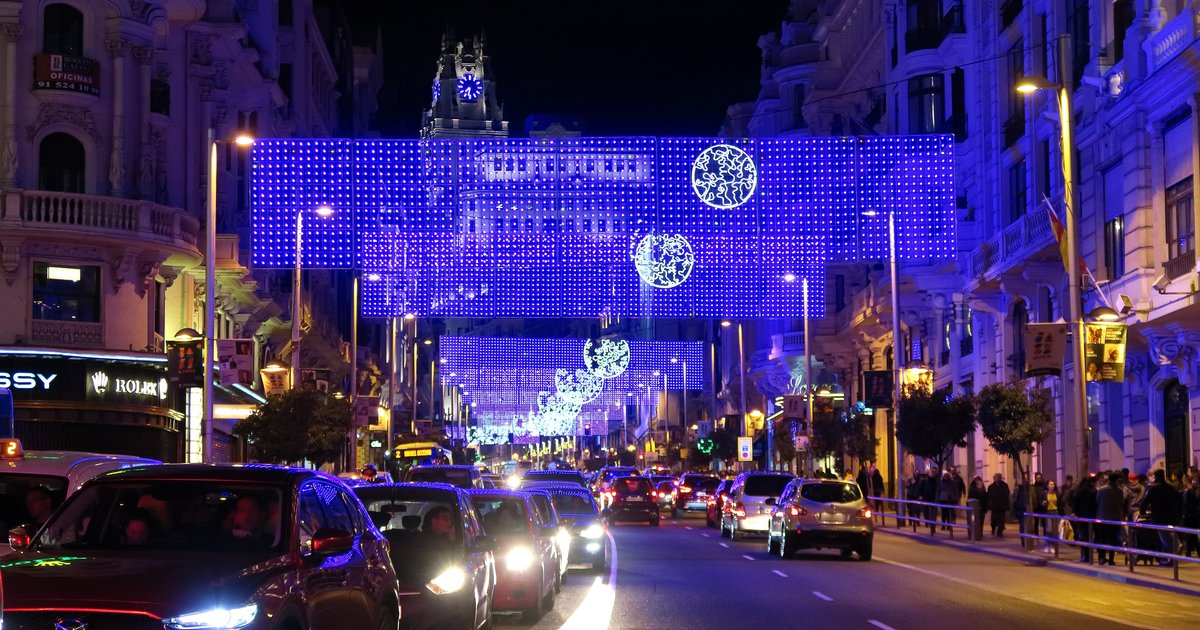
Christmas in Madrid: An Overview
If you live in Madrid, the Christmas season is impossible to miss - and it's longer than the one you may be used to. It runs from a late-November lights switch-on right through to 6 January, Three Kings' Day, when Spanish children traditionally receive their main presents. That's nearly six weeks of decorated streets, markets, special menus and a steady rhythm of public events, all happening on your doorstep.
The Spanish Christmas also has a different centre of gravity from the British or American one. The 25th matters, but it shares the spotlight with three other big dates: 22 December and the El Gordo lottery draw, New Year's Eve with its midnight grapes, and 5-6 January with the Three Kings. Understanding that shape is the difference between drifting through the season as an outsider and actually taking part in it like a local.
This guide walks through the whole season the way a Madrid resident experiences it - what's worth your time, what to skip, when things are open, and how to fit it around an ordinary working December.
The big idea: In Spain, the Three Kings - not Santa - traditionally bring children their main gifts, on the morning of 6 January. Santa Claus (Papa Noel) has become popular too, so many families now do both. If you have kids, expect the festive season to keep going well after New Year.
The 2026 Festive Calendar
Some festive dates in Madrid are fixed every year; others are set by the city council each autumn. Here's the season at a glance, with a note on which dates to confirm.
Short answer (October 2026): the Ayuntamiento de Madrid has not yet announced when the 2026 Christmas lights go on. It usually confirms the date in late October (the 2025 date was announced on 30 October 2025). Recent switch-ons were Thursday 28 November 2024 at Puerta del Sol and Saturday 22 November 2025 at Plaza de Cibeles, so expect the second half of November 2026. The lights stay on until Wednesday 6 January 2027, the day after the Cabalgata de Reyes.
| Date | What's happening |
|---|---|
| Late November | Official Christmas lights switch-on (encendido). No fixed weekday: Thursday 28 November in 2024 (Puerta del Sol), Saturday 22 November in 2025 (Plaza de Cibeles, 19:30). The 2026 date is not announced yet; the council usually confirms it in late October. |
| Late Nov to Dec | Plaza Mayor Christmas market opens (27 Nov in 2025); Cortylandia switches on (22 Nov in 2025); neighbourhood markets and free activities run across the city. |
| Sat 5 to Tue 8 Dec | Four-day puente. Constitution Day (6 Dec) falls on a Sunday, so the Comunidad de Madrid moves the holiday to Monday 7 December; Tuesday 8 December (Inmaculada) is a holiday too. Expect the centre to be packed. |
| Tue, Dec 22 | El Gordo, the Christmas lottery draw. A national event broadcast live all morning. |
| Thu, Dec 24 | Nochebuena, Christmas Eve, the main family dinner. Shops close in the afternoon; public transport runs reduced. |
| Fri, Dec 25 | Christmas Day. Public holiday, so most shops are closed and transport runs a holiday timetable. Long weekend. |
| Mon, Dec 28 | Dia de los Santos Inocentes, Spain's equivalent of April Fools' Day. Expect pranks and joke news stories. |
| Thu, Dec 31 | Nochevieja, New Year's Eve. The twelve grapes at midnight, with crowds at Puerta del Sol. |
| Fri, Jan 1 | New Year's Day. Public holiday, most shops closed. Another long weekend. |
| Tue, Jan 5 | Cabalgata de Reyes, the Three Kings' parade down the Castellana to Cibeles in the evening (18:00 start in January 2026). |
| Wed, Jan 6 | Dia de Reyes, Three Kings' Day. Public holiday; children open their main presents. Lights and decorations come down after this. |
Confirm before you plan: The lights switch-on date and the precise Cabalgata route and timing are set by Madrid's city council each autumn and can shift year to year. The lottery draw (22 Dec), New Year's Eve and Three Kings' Day are fixed annual dates. We update this page when the 2026 programme is published.
What happened last season (2025-26)
| Event | 2025-26 edition |
|---|---|
| Lights switch-on | Sat 22 Nov 2025, 19:30, Plaza de Cibeles (moved from Puerta del Sol), with a video-mapping show on the Palacio de Cibeles |
| Lighting hours | 18:00 to midnight Sunday to Thursday, to 01:00 on Fridays and Saturdays, later on 7, 24 and 31 December and 5 January. More than 13 million LED bulbs at over 240 locations, until 6 Jan 2026. |
| Plaza Mayor market | 27 Nov to 31 Dec 2025, 100+ stalls, 10:00 to 21:00 (22:00 Fridays, Saturdays and holiday eves) |
| Cortylandia | 22 Nov 2025 to 5 Jan 2026 at El Corte Ingles Preciados-Callao; shows on the hour at 12:00 to 14:00 and 17:00 to 21:00, none on 25 Dec or 1 Jan |
| Cabalgata de Reyes | Mon 5 Jan 2026, 18:00 from Paseo de la Castellana (Nuevos Ministerios) to Plaza de Cibeles, with the Kings' speech just before 21:00; over 200,000 people expected |
Sources: idealista (19 November 2025) and El Espanol (30 October 2025) on the lights; La Guia GO (November 2025) on the Plaza Mayor market; Madridiario and Hola (November 2025) on Cortylandia; eldiario.es and diario.madrid.es (January 2026) on the Cabalgata. Holiday dates: the official 2026 public-holiday calendar (BOE, October 2025).
The Lights Switch-On
Madrid takes its Christmas lighting seriously. The encendido - the official switch-on - is a genuine city event, drawing crowds to the centre on an evening in the second half of November, with a countdown, music and a guest who presses the switch alongside the mayor. In 2025 it moved from its traditional home at Puerta del Sol to Plaza de Cibeles. From that night, the lights come on every evening until Three Kings' Day.
The displays themselves are a city-wide attraction. Some streets get standard illuminations; others get statement installations from well-known designers. The classic walk for a resident is to head down Gran Via, take in the giant lit tree near the Cibeles and Alcala junction, and loop through the squares - Puerta del Sol with its big tree, Plaza Mayor, and the Paseo del Prado with its sculptural light figures. It's a free, easy evening out, and a good one to do with visiting family.
Beat the crowds: The lights look just as good on a Tuesday as on a Saturday. Mid-week evenings, or before about 7pm, give you the full effect with far more room to move and far better photos. The weekend before Christmas is the busiest the centre gets all year.
Markets, Cortylandia & Belenes
The Plaza Mayor market
The traditional Christmas market in Plaza Mayor is the best-known in the city. Its stalls lean heavily towards the Spanish nativity tradition: figures for your belen (nativity scene), moss and cork for the landscape, decorations, and a famous run of stalls selling joke items and wigs for New Year's Eve. It's more about browsing and atmosphere than serious shopping - go for the feel of it.
Cortylandia
Cortylandia is a much-loved Madrid institution: a free, animated Christmas display mounted on the facade of the El Corte Ingles store near Callao. Mechanical figures move and sing along to a theme that changes each year, on a loop through the day. Small children adore it; if you have a young family, it's an essential and free stop.
Belenes - nativity scenes
The belen is central to a Spanish Christmas. Across December, churches, public buildings and the city itself put up elaborate nativity displays, and there's usually a large official municipal belen open to the public in the centre. They're free to visit, quiet, and a window into the season's religious roots.
Other markets and activities
Beyond Plaza Mayor, seasonal markets appear at Plaza de Espana and in neighbourhood squares across the districts, and the city stages free open-air activities - rinks, fairground attractions and shows - in the run-up to the holidays. Your own barrio almost certainly has something on; it's often less crowded and more relaxed than the centre.
Madrid's festive calendar in your inbox, daily
Madrid Expat Daily: a 5-minute English digest of the day's local news, plus the markets, lights and events worth your time. Free, no credit card.
El Gordo: The Christmas Lottery
If there's one Christmas tradition that catches newcomers off guard, it's the lottery. The Loteria de Navidad is enormous - one of the biggest lotteries in the world by total prize money - and its top prize is nicknamed El Gordo, "the fat one". The draw takes place on the morning of 22 December and is broadcast live for hours, with children from Madrid's San Ildefonso school singing out the winning numbers in a chant that every Spaniard recognises.
What makes it a true social ritual is how tickets are bought. People rarely buy a whole ticket alone; instead they buy participaciones - shares - in a number with their workmates, their family, their local bar, their gym. By 22 December half the city is holding a small stake in the same handful of numbers as their friends and neighbours. As a resident, expect to be offered shares; joining in is part of belonging to the place.
Worth knowing: If your workplace or local bar organises a shared number, ask for your share early - they sell out well before the 22nd. Keep your slip safe: it's your proof of the stake. On the morning of the draw, plenty of bars have it on the TV.
New Year's Eve at Puerta del Sol
Spain's New Year's Eve - Nochevieja - has one unmissable ritual: the twelve grapes. As the clock on the Real Casa de Correos building in Puerta del Sol strikes midnight, you eat one grape on each of the twelve chimes. Manage all twelve in time and the coming year is supposedly lucky. It's harder than it sounds, and that's the fun of it.
Puerta del Sol is the symbolic heart of the celebration - the clock there is the one the whole country watches on TV. Thousands of people gather in the square itself, which fills up early in the evening and operates with controlled access and security checks. If you want to be there in person, go very early, dress warmly, and be ready for a long, packed wait.
That said, most Madrid residents do not go to Sol. The more typical evening is a long dinner at home or with friends, doing the grapes in front of the televised broadcast, and then heading out afterwards - the city's nightlife runs late into New Year's morning. Either version is perfectly authentic; pick the one that suits you.
Pre-grapes practice: Markets and supermarkets sell small tins of pre-peeled, de-seeded grapes specifically for the twelve-grape ritual - they make keeping pace with the chimes much easier. A small thing, but a genuinely local tip.
Three Kings & the Cabalgata
For Spanish children, the real climax of Christmas isn't 25 December - it's the night of 5 January and the morning of the 6th. The Three Wise Men, the Reyes Magos, are the ones who traditionally bring the main presents.
The evening of 5 January brings the Cabalgata de Reyes, a grand parade through central Madrid. The Three Kings ride elaborate floats, accompanied by performers, music and dancers, and throw sweets into the crowd - children come armed with bags to catch them. It's a magical, family-centred event, and it's free. In January 2026 it set off at 18:00 from the Paseo de la Castellana near Nuevos Ministerios and ran down Recoletos to Plaza de Cibeles, where the Kings spoke just before 21:00; the city publishes the 2027 route in December. Districts across Madrid also run their own smaller neighbourhood cabalgatas, which are easier to enjoy with small children than the big central one.
On the morning of 6 January, Dia de Reyes, families open presents and eat roscon de Reyes (more on that below). It's a public holiday and the official end of the festive season - after it, the lights come down and Madrid returns to normal.
Festive Food & Customs
The Madrid Christmas table has its own distinct repertoire. A few things you'll meet everywhere:
- Turron - a nougat made with almonds and honey, sold in slabs. The two classics are turron de Jijona (soft) and turron de Alicante (hard). It appears on every festive table and makes a safe gift.
- Polvorones and mantecados - crumbly shortbread-style sweets that almost dissolve in the mouth, sold individually wrapped.
- Roscon de Reyes - a ring-shaped sweet bread, decorated with candied fruit, eaten on Three Kings' Day. It hides a small figurine and a dried bean: whoever finds the figurine is "crowned" for the day, and whoever gets the bean traditionally pays for the roscon.
- Cava - Spain's sparkling wine, the default toast for the festive season and New Year's Eve.
- The big dinners - Nochebuena (24 Dec) and Nochevieja (31 Dec) are long, late, generous family meals, often built around seafood, lamb or other roasts. They are family-first occasions, which is worth knowing if you're hoping to find restaurants open or friends free those nights.
Practical Info for Residents
What's open, what's closed
December is a busy retail month and shops generally keep long hours. The closures to plan around are Monday 7 and Tuesday 8 December (both holidays in Madrid in 2026), the afternoon of 24 December, all of 25 December, 1 January and 6 January. On those days many shops shut and the Metro and buses run holiday timetables. Stock up on groceries the day before each of those. Many restaurants also close on the 24th and 25th, since those are family-dinner occasions.
Getting around
The Metro is the only sensible way to reach the centre during the festive season. Around the lights, the markets and especially the Cabalgata, central streets get extremely crowded and some are closed to traffic. On the big public-holiday dates, transport runs reduced services - check before you travel late at night.
Weather
A Madrid December is cold and dry, with crisp, sunny days and genuinely cold evenings - temperatures often drop to or below freezing at night. Snow in the city is uncommon but not unheard of. Wrap up properly for evening outings: the lights and the Cabalgata are best enjoyed with a warm coat, gloves and a hat.
If you're staying in Madrid for the holidays
Plenty of expats spend Christmas in the city rather than travelling. The good news: the season is full of free, public things to do, so you're never short of an outing. The thing to plan for is the family-centred days - 24 and 25 December and 1 and 6 January - when the city is quieter and many places are closed. Booking a restaurant ahead, or organising something with other friends staying in town, makes those days far better.
Insider Tips
- Do the lights mid-week. The displays are identical on a Tuesday and free of the weekend crush. Your photos and your patience will both thank you.
- Watch the Cabalgata from your own district. The central parade is spectacular but heaving. Neighbourhood cabalgatas catch more sweets per child and far less stress.
- Get your lottery share early. Shared numbers through work or your local bar sell out before the 22nd - ask as soon as you hear one's going round.
- Shop before the holiday closures. The afternoons before 24 Dec, 25 Dec, 1 Jan and 6 Jan are the gaps that catch newcomers out. A little forward planning avoids an empty fridge.
- Skip Sol for New Year if crowds aren't your thing. Doing the grapes at home with the TV broadcast is what most Madrilenos actually do - and it's no less real.
- Buy the tinned grapes. Pre-peeled, de-seeded New Year grapes are sold everywhere in late December and make the midnight ritual genuinely achievable.
FAQ
When do the Christmas lights switch on in Madrid?
The 2026 date has not been announced yet; Madrid's city council usually confirms it in late October. The switch-on (encendido) has no fixed weekday: it was Thursday 28 November in 2024 at Puerta del Sol and Saturday 22 November in 2025 at Plaza de Cibeles, at 19:30. The lights then stay on every evening until Three Kings' Day, Wednesday 6 January 2027.
Which days are public holidays in Madrid over Christmas 2026?
Constitution Day (6 December) falls on a Sunday in 2026, so the Comunidad de Madrid moves the holiday to Monday 7 December, and Tuesday 8 December (Inmaculada) is also a holiday: a four-day weekend from Saturday 5 December. Christmas Day and New Year's Day both fall on a Friday, and Three Kings' Day, 6 January 2027, on a Wednesday.
Where is the Christmas market in Madrid?
The best-known traditional market is in Plaza Mayor, selling nativity figures, decorations and festive novelties. Other markets appear around the city, including at Plaza de Espana and various neighbourhood squares, alongside free open-air activities in the run-up to the holidays.
What is Cortylandia?
Cortylandia is a free animated Christmas display on the facade of the El Corte Ingles store near Callao. Mechanical figures move and sing to a theme that changes each year. It's a long-standing Madrid tradition and a favourite with families and small children.
What is El Gordo and when is it drawn?
El Gordo - "the fat one" - is the top prize of Spain's enormous Christmas lottery, drawn on 22 December every year. The draw is a national event broadcast live, with children from Madrid's San Ildefonso school singing the winning numbers. Many people buy tickets in shared portions with workmates, friends and family.
How does New Year's Eve at Puerta del Sol work?
At midnight on 31 December, the clock on the Real Casa de Correos in Puerta del Sol strikes twelve and Spaniards eat twelve grapes, one on each chime, for luck. Thousands gather in the square, which fills early and has restricted access; many residents do the grapes at home with the televised broadcast instead.
What is the Cabalgata de Reyes?
The Cabalgata de Reyes is the Three Kings' parade on the evening of 5 January, when the Three Wise Men ride through central Madrid on floats throwing sweets to the crowds. It's the high point of the Spanish Christmas for children, who receive their main presents the next morning, on 6 January.
Are shops open over Christmas in Madrid?
Shops are generally busy and open through December, often with extended hours. The key closures to plan around are the afternoon of 24 December, 25 December, 1 January and 6 January, when most shops shut and public transport runs on a holiday timetable.
Where can I keep up with what's happening in Madrid?
Our free daily newsletter sends a short, English-language summary of Madrid's news and events every day - so through the festive season and all year round, you always know what's on. Join below.
Daily Madrid news in English. Free.
Join 1,800+ expats across Spain. Every day: a 5-minute summary of Madrid news, events and what's worth your time - in clear English.