
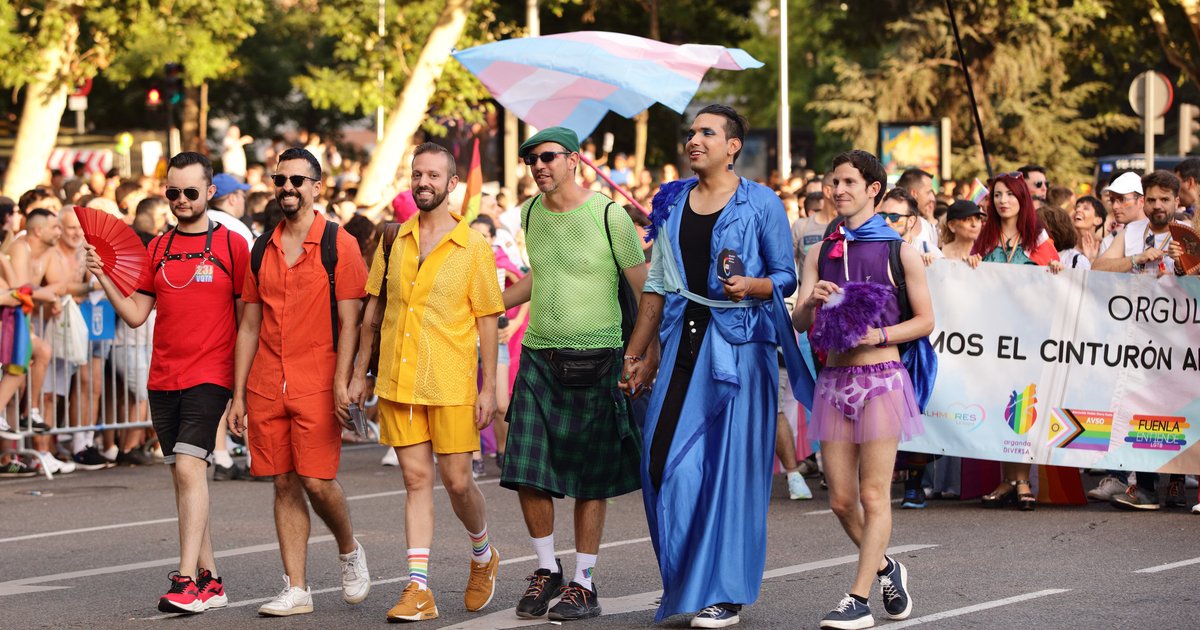
What is Madrid Pride?
Madrid Pride - known locally as Orgullo, and branded as MADO (Madrid Orgullo) - is one of the largest Pride celebrations on the planet. For roughly ten days at the turn of June and July, central Madrid turns into an open-air festival of concerts, street parties, talks, sport and culture, building to a parade that draws crowds counted in the hundreds of thousands. When Madrid hosted WorldPride in 2017, the city pulled in well over a million visitors - and the annual event has carried that scale and reputation ever since.
If you've just moved to Madrid, the first thing to understand is that Orgullo is not a niche event tucked away in one corner of the city. It is one of the biggest dates on Madrid's entire calendar, full stop - on a par with the city's patron-saint festivals. It is loud, joyful, political and unmistakably Madrileno: a celebration of LGBTQ+ rights and visibility that the whole city, gay and straight, turns out for. Whoever you are, you are welcome in the crowd.
New here? "Orgullo" is simply the Spanish word for "pride", and "MADO" is the official festival brand you'll see on posters and the programme. Locals use the terms interchangeably - if a neighbour mentions Orgullo, they mean exactly this.
Madrid Pride 2027: Dates
Madrid Pride is anchored to the weekend closest to 28 June - the anniversary of the 1969 Stonewall uprising in New York and International LGBT Pride Day. The headline parade always falls on the first Saturday of July, which in 2027 lands on Saturday 3 July 2027, with the festival running for roughly ten days in the run-up. The city confirms the full MADO programme in the spring; the expected window and set-piece dates are below, and we update them here the moment the official schedule is published.
Festival window
Expected late June to 4 July 2027
Around ten days of concerts, parties and cultural events, opening with the Orgullo de Barrio in Chueca. Exact start date confirmed in spring 2027.
The big parade
Saturday 3 July 2027
The manifestacion sets off at 19:00, traditionally Atocha to Plaza de Colon.
Pregon
Expected Wed 30 June 2027
The opening speech and concert from a stage in Chueca that officially launches the festival.
Carrera de Tacones
Expected Thu 1 July 2027
The famous high-heel race down Calle de Pelayo, two days before the parade.
The shape of the week is consistent year to year: the festival opens with the pregon (an opening speech and concert in Chueca), runs a packed programme of free concerts and events across several days, stages the much-loved Carrera de Tacones high-heel race, and culminates in the enormous Saturday parade. A closing event wraps things up on the final Sunday.
Why It Matters If You Live in Madrid
For a weekend visitor, Madrid Pride is a spectacular party. For someone settling into the city, it is something more useful: a fast, generous introduction to how Madrid actually works as a community. Here's why it's worth planning around.
- It's the friendliest week of the year to meet people. Chueca's bars and squares are packed with locals and newcomers in an open, talkative mood. If you've been finding it hard to break into Madrid socially, this is the easiest week to do it.
- You see the whole city out at once. Orgullo is not a subculture event - families, retirees, office groups, tourists and lifelong Madrilenos all fill the streets together. It's a good week to feel how mixed and open the city really is.
- The centre changes shape. Streets close, Metro stations get crowded, and the rhythm of the city shifts for several days. Knowing the schedule means you can lean into it - or route around it - rather than being caught out.
- It's free. Almost the entire public programme - concerts, the parade, the street stages - costs nothing. For a newcomer still finding their feet financially, that's a full week of the city at its best for the price of a few drinks.
The Parade (Manifestacion)
The centrepiece of Madrid Pride is the manifestacion - the parade. The Spanish word is worth noting: manifestacion means "demonstration", and that's deliberate. Madrid's parade keeps a genuine campaigning spirit alongside the celebration, with banners, slogans and a yearly theme as well as music and colour.
The parade traditionally forms up near Atocha, heads north up the grand Paseo del Prado past the great museums, and finishes at Plaza de Colon, where a main stage hosts speeches and performances. It is a slow, dense river of floats from political parties, unions, embassies, businesses, sports clubs and community groups, threaded through with sound systems and dancing crowds. Setting off at 19:00, it rolls on through the evening and into the night, and reaching the end can take hours.
You do not need a ticket, a wristband or a plan - you simply turn up along the route and join in, or watch from the side. Shade is scarce on the Paseo del Prado in early July, so pick your spot with the sun in mind.
Best places to watch: The wide central section of Paseo del Prado gives you space and a clear view of the floats. Plaza de Colon at the finish is the most electric but also the most crowded. If you want the spectacle without the deepest crush, watch from partway along the route rather than at either end.
Every MADO event in your inbox, daily
Madrid Expat Daily: a 5-minute English digest of the day's local news, plus the concerts, parties and events worth your time. Free, no credit card.
Chueca: The Beating Heart
If the parade is the spine of Madrid Pride, Chueca is its heart. This compact, lively neighbourhood just north of Gran Via has been the centre of LGBTQ+ life in Madrid for decades, and during Orgullo it becomes one giant street party.
The main free stages cluster around Plaza de Chueca, Plaza del Rey and the surrounding streets, with concerts and DJ sets running from afternoon into the small hours. Calle Pelayo, Calle Hortaleza, Calle Augusto Figueroa and the streets between them fill end to end with people. Bars spill onto the pavement, balconies become viewing platforms, and the whole quarter pulses for days.
For a newcomer, Chueca is also just a genuinely good neighbourhood to get to know: independent shops, terraced cafes, the historic San Anton market and an easygoing, walkable feel. The Pride week is the loudest possible introduction to it - come back on a normal week to see its everyday version.
The two faces of the festival
It helps to think of Orgullo as having a daytime self and a night-time self. The daytime - the parade, the early concerts, the cultural events, the sport - is relaxed, mixed-age and family-friendly. The night-time in Chueca is a high-energy, packed, adult party that runs very late. Neither is better; just decide which one you're showing up for, and plan your evening accordingly.
Highlights Beyond the Parade
The Pregon (opening)
The festival officially opens with the pregon, an opening speech delivered from a stage in Chueca, usually followed by the first big concert of the week. It's the moment the crowds first fill the squares and the festival mood switches on.
Carrera de Tacones (the high-heel race)
One of Madrid Pride's most beloved and most photographed traditions, the Carrera de Tacones sees competitors sprint down the cobbles of Calle de Pelayo in high heels, cheered on by an enormous, very loud crowd. It's chaotic, funny and quintessentially Orgullo. Arrive early - good viewing spots vanish fast.
Free concerts
Across the festival, the MADO stages host a long run of free concerts - Spanish pop headliners, drag performances, DJ sets and more. The full line-up is published in the official programme each year. For most newcomers, the concerts are the easiest, most enjoyable way into the festival.
Culture and sport
Around the headline events, the programme typically spreads into talks, exhibitions, film screenings and LGBTQ+ sports tournaments across the city. These are the quieter, less crowded side of Orgullo - worth a look if the main squares feel overwhelming.
Practical Info for Expats
Getting around
Use the Metro - it's by far the simplest way to move during Pride. Chueca has its own station on line 5, and Gran Via (lines 1 and 5), Banco de Espana (line 2) and Colon (line 4) all put you within easy walking distance. Expect very busy trains around the parade, and rolling street closures across the centre on the main weekend. Do not attempt to drive into central Madrid during the parade.
Weather and what to wear
Late June and early July in Madrid are hot - daytime highs frequently above 32°C, often higher, with strong sun and little breeze. Dress light, wear a hat and sunglasses, use sun cream, and carry water. Evenings stay warm. Comfortable shoes are essential: you'll be on your feet, on hard pavement, for hours.
Cash, phones and crowds
Central Madrid is card-friendly, but some street stalls prefer cash - carry a little. Dense festival crowds are a magnet for pickpockets, so keep your phone and wallet secured and zipped away, especially in the thick of the parade and around Metro entrances.
Language
Madrid Pride is one of the most international weeks of the year, and English is widely spoken across Chueca's bars and venues. You will have no trouble joining in as an English speaker. The official programme is mostly in Spanish, though - which is exactly the kind of thing our newsletter translates for you.
Where to stay or host visitors
If friends are visiting for Pride, warn them early: hotels and short-term rentals in and around the centre book out and prices climb sharply for the main weekend. A place near any central Metro line, even a little outside Chueca, keeps them close without paying the peak-of-the-action premium.
Insider Tips
- Pace the week, not just the day. Orgullo runs for around ten days. You don't need to be in Chueca every night - pick two or three events you actually care about and enjoy them properly.
- Go early for the set-piece events. For the Carrera de Tacones and the parade finish at Colon, the good vantage points fill up well in advance. Arriving early is the difference between seeing it and seeing the back of someone's head.
- Eat before you dive in. Chueca's restaurants get slammed during Pride. Either book ahead or eat at the edges of peak times - or in a neighbouring barrio - and then head into the crowd.
- Use the side streets. The main squares are intense. The smaller streets around them often have just as good a mood with far more breathing room.
- Hydrate and find shade. Madrid in early July is genuinely hot. Treat water and shade breaks as part of the plan, not an afterthought - heat, not crowds, is what ends most people's day early.
- Check the schedule each morning. Programmes shift, stages change and street closures move. Knowing what's confirmed for today saves a lot of wandering.
FAQ
When is Madrid Pride 2027?
The MADO parade always falls on the first Saturday of July, which in 2027 is Saturday 3 July 2027, setting off at 19:00 on the traditional Atocha to Plaza de Colon route. The festival runs for roughly ten days in the run-up, so expect it to open in late June and close on Sunday 4 July 2027. The city confirms the full day-by-day programme in the spring, and we update these dates here as soon as it does.
Where does Madrid Pride take place?
The heart of the festival is Chueca, Madrid's historic LGBTQ+ neighbourhood, where the main stages and street parties cluster around Plaza de Chueca and Plaza del Rey. The parade runs along a wider central route, traditionally from Atocha up Paseo del Prado to Plaza de Colon.
Is Madrid Pride free?
Yes. The concerts, street parties, parade and almost everything in the public MADO programme are free and open to anyone. You only pay for food, drinks and any private club events you choose to attend.
What is the Carrera de Tacones?
It's Madrid Pride's famous high-heel race, run down Calle de Pelayo in Chueca. Competitors sprint in heels in front of a huge, loud crowd. It's one of the most popular and most photographed events of the week, usually held a day or two before the parade.
Is Madrid Pride family-friendly?
The daytime parade and much of the early programme are genuinely family-friendly, and you'll see plenty of children and grandparents along the route. The late-night Chueca street parties are an adult, high-energy environment. Plan around the time of day rather than avoiding the festival altogether.
Do I need to speak Spanish to enjoy it?
No. Madrid Pride is one of the most international events of the year, and English is widely spoken across Chueca's bars and venues. A few words of Spanish always help, but you'll have no trouble taking part as an English speaker.
Where can I find the full 2027 programme?
The official day-by-day MADO programme is published online each spring, with concert line-ups and event times added as they're confirmed. For an English-language daily summary of what's on - during Pride and every other day of the year - join our free newsletter below.
Daily Madrid news in English. Free.
Join 1,800+ expats across Spain. Every day: a 5-minute summary of Madrid news, free events and local recommendations - including the full Orgullo 2027 programme.